

Four crafts, woven into one.
Four crafts,
woven into one.
Four crafts from separate lineages meet beneath a single tree. What does each contribute, and how do they merge? An introduction to the four crafts behind MAKOTO.
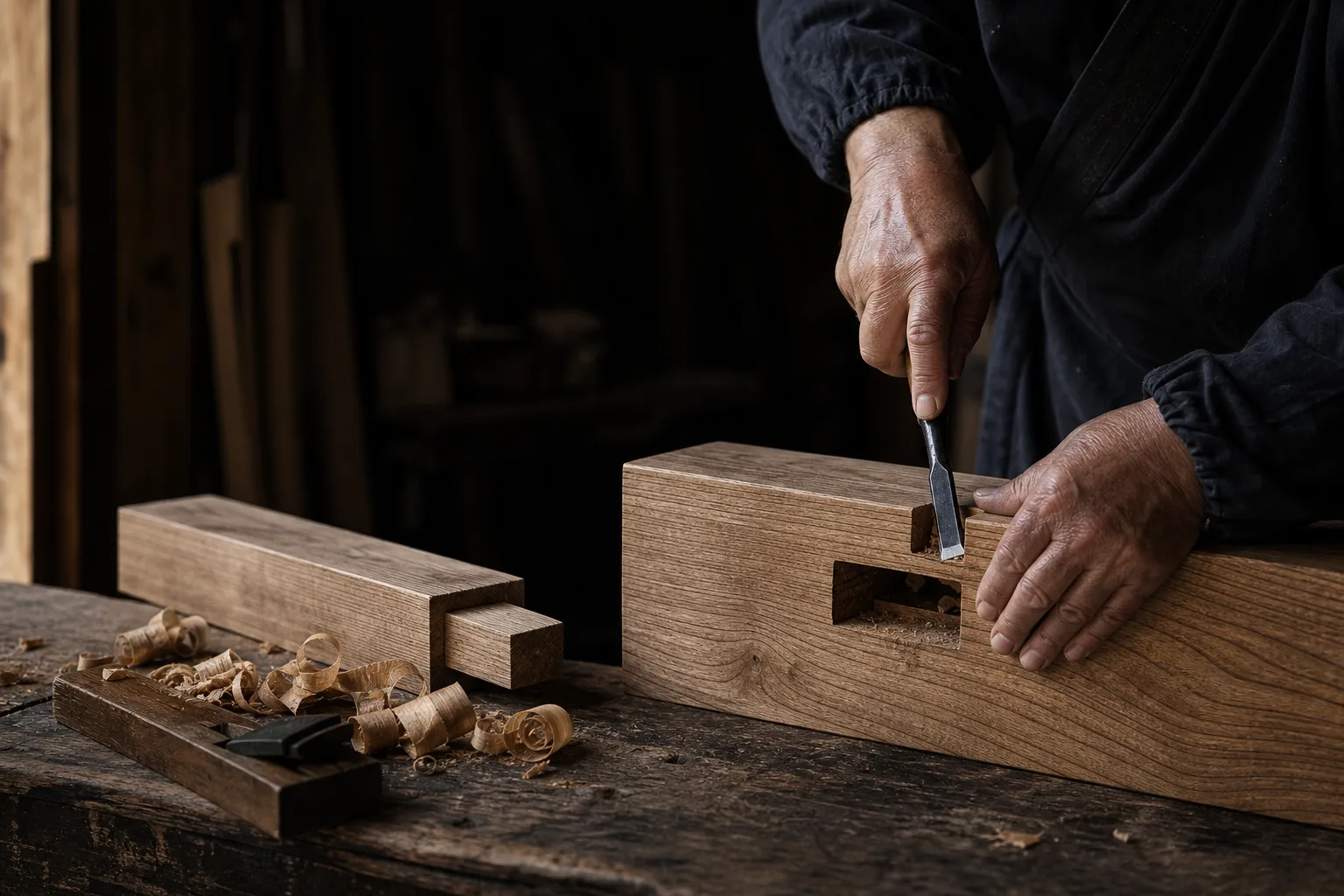
Joining wood without a single nail.
Tsugite and shiguchi — joinery that locks wood to wood precisely, built without relying on metal fittings. Handwork inherited through temple architecture forms the skeleton of the furniture. More than any drawing, it is time spent facing the wood that speaks. This is the foundation that binds the four crafts.
The precision of joinery
Without nails or fittings, wood is locked to wood through joinery known as tsugite and shiguchi. The temple carpenter's work begins with reading the wood's character. Even within one species, character differs entirely with the land and years that raised it — so rather than cutting to a drawing, the hands move to suit each piece, never the same twice.
This craft has been handed down for more than a thousand years on the sites of temples and shrines. A structure without nails never hinders the wood's breathing, and grows firmer and better settled with time. The temple carpenter's work is more than building — it is an accumulation of wisdom for letting wood live long.
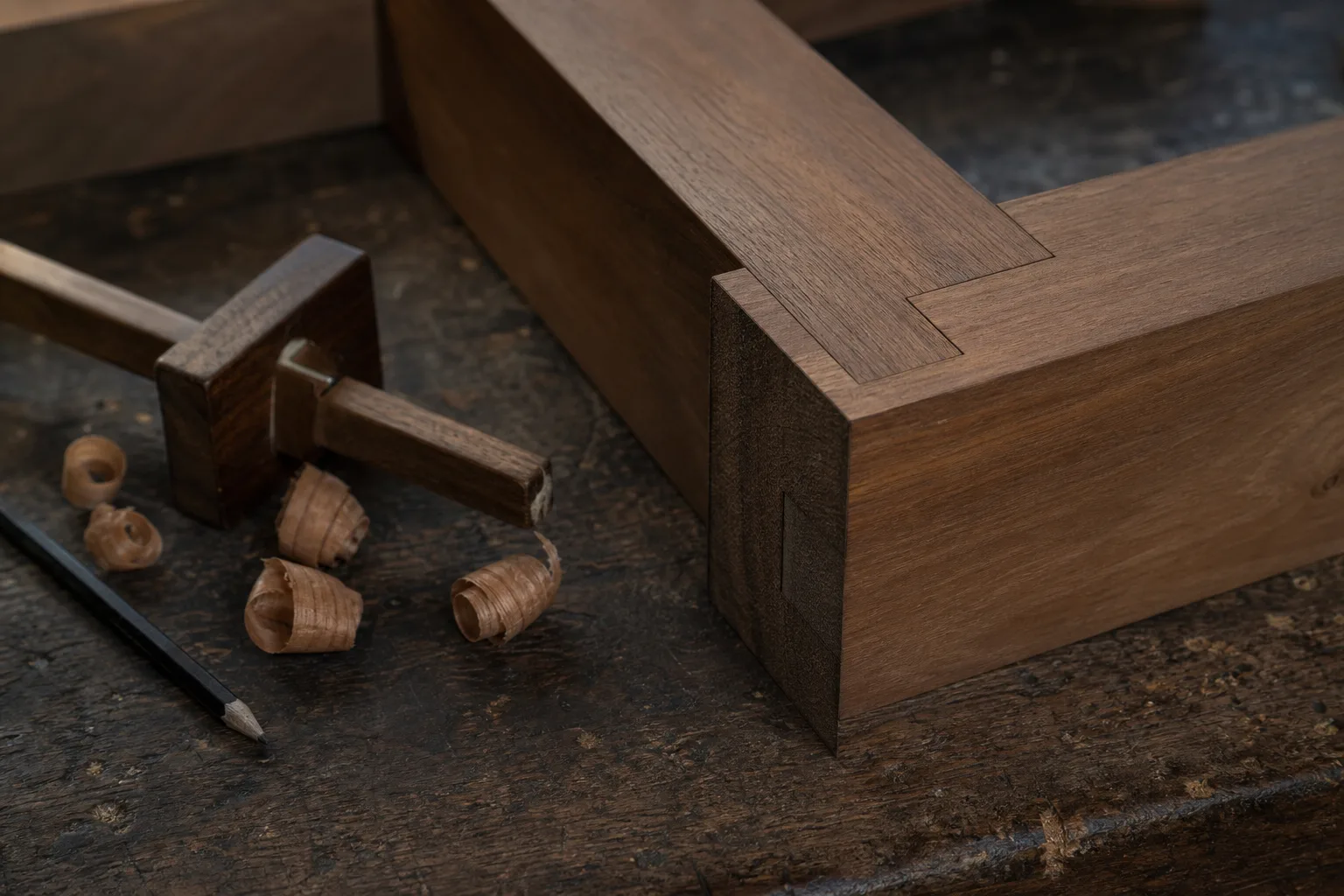
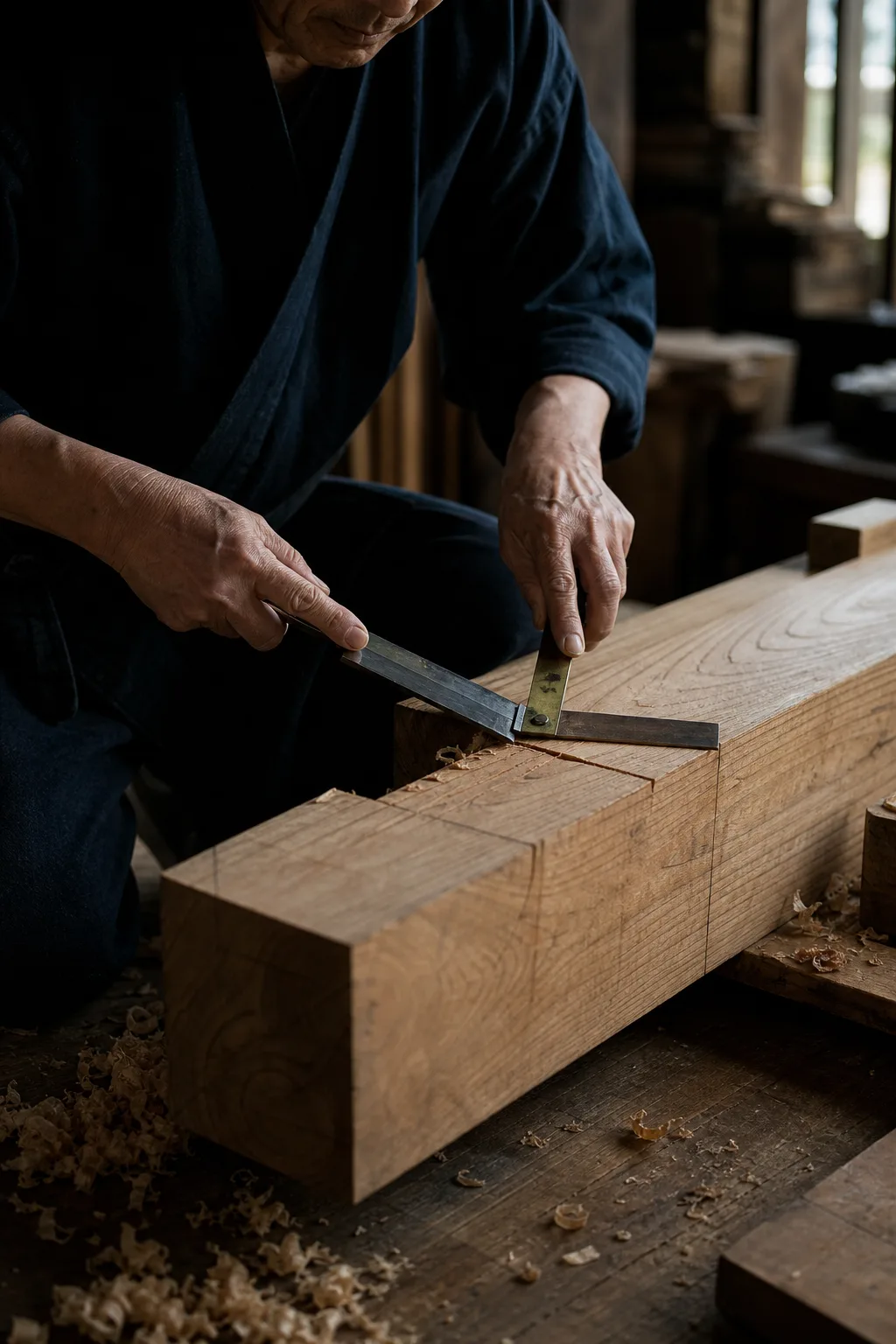
In MAKOTO's furniture, this craft builds the skeleton: the joinery of the legs that carry the top, the sliding dovetail battens that hold back warping. The greatest care goes into the parts no one sees — the foundation that binds the four crafts.
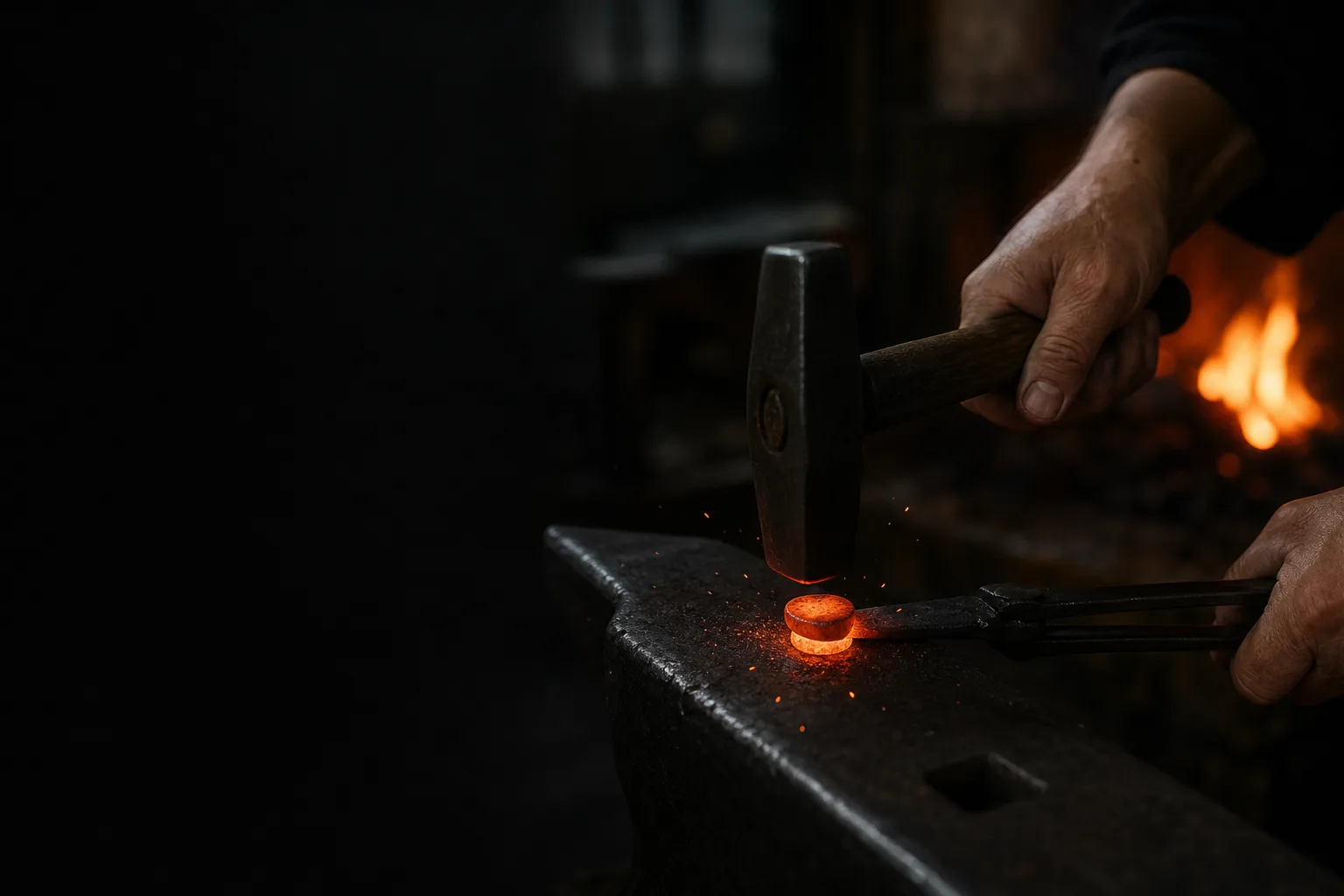
Fire and hammer breathe life into steel.
Heated steel is struck by hand, its form decided little by little. The handwork of iron and fire, long responsible for everything from tools to ornament, becomes the fittings that support and adorn the wood. No two are alike — they carry expressions no machine can produce.
The essence of fire and steel
Heat, strike; strike, heat again. In hand forging, the steel's temperature is judged by the faintest shift of color, and everything — the angle of the hammer, the weight of each blow — is entrusted to the memory in the fingertips. Aim for the same shape, and still the flame and steel yield a different expression every time.
From swords to farm tools to architectural hardware, the blacksmith's handwork has been refined over a thousand years alongside daily life in Japan. The shadowed, softly gleaming hammered surface, absent from mass-produced hardware, carries the very hours spent in dialogue with fire.
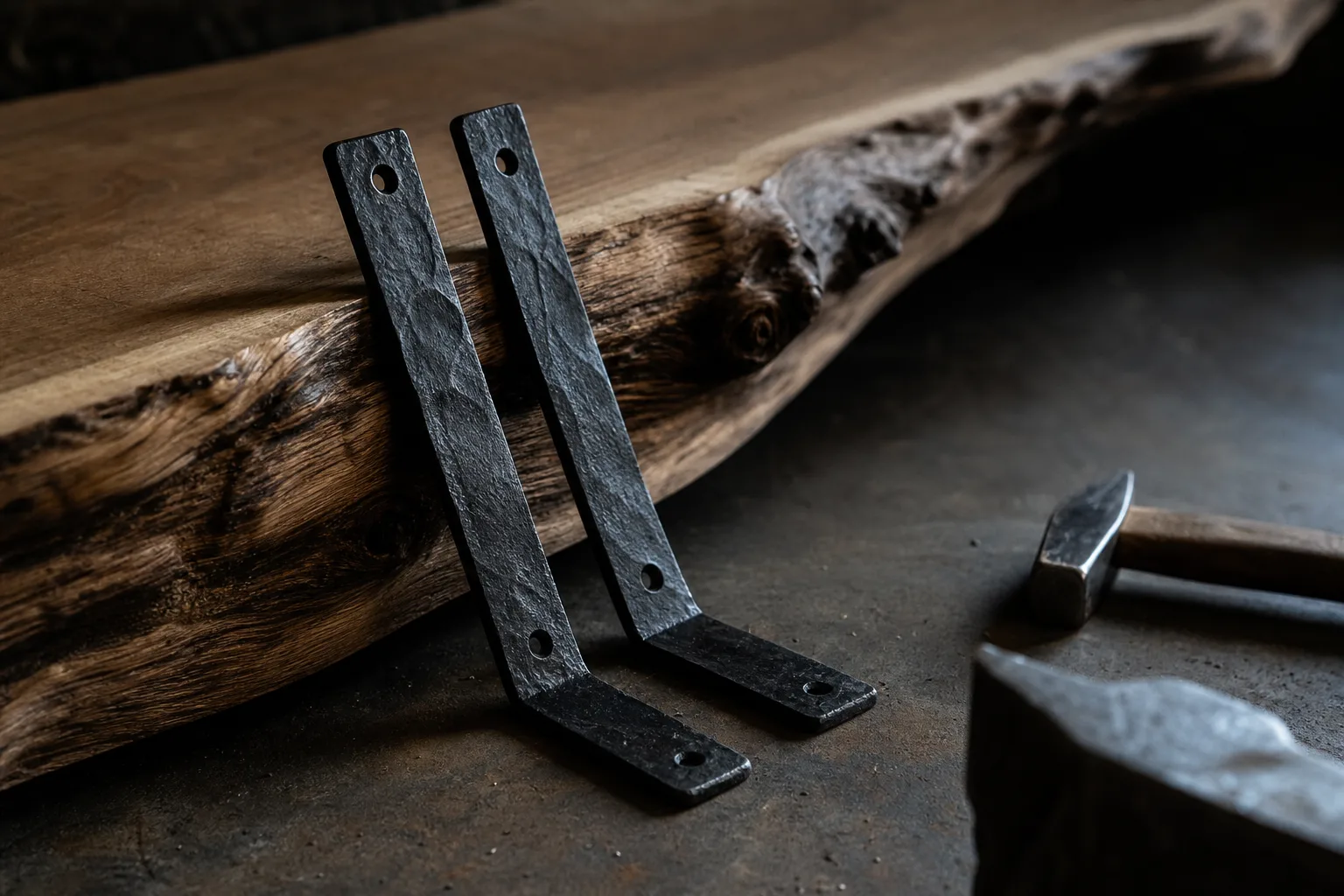
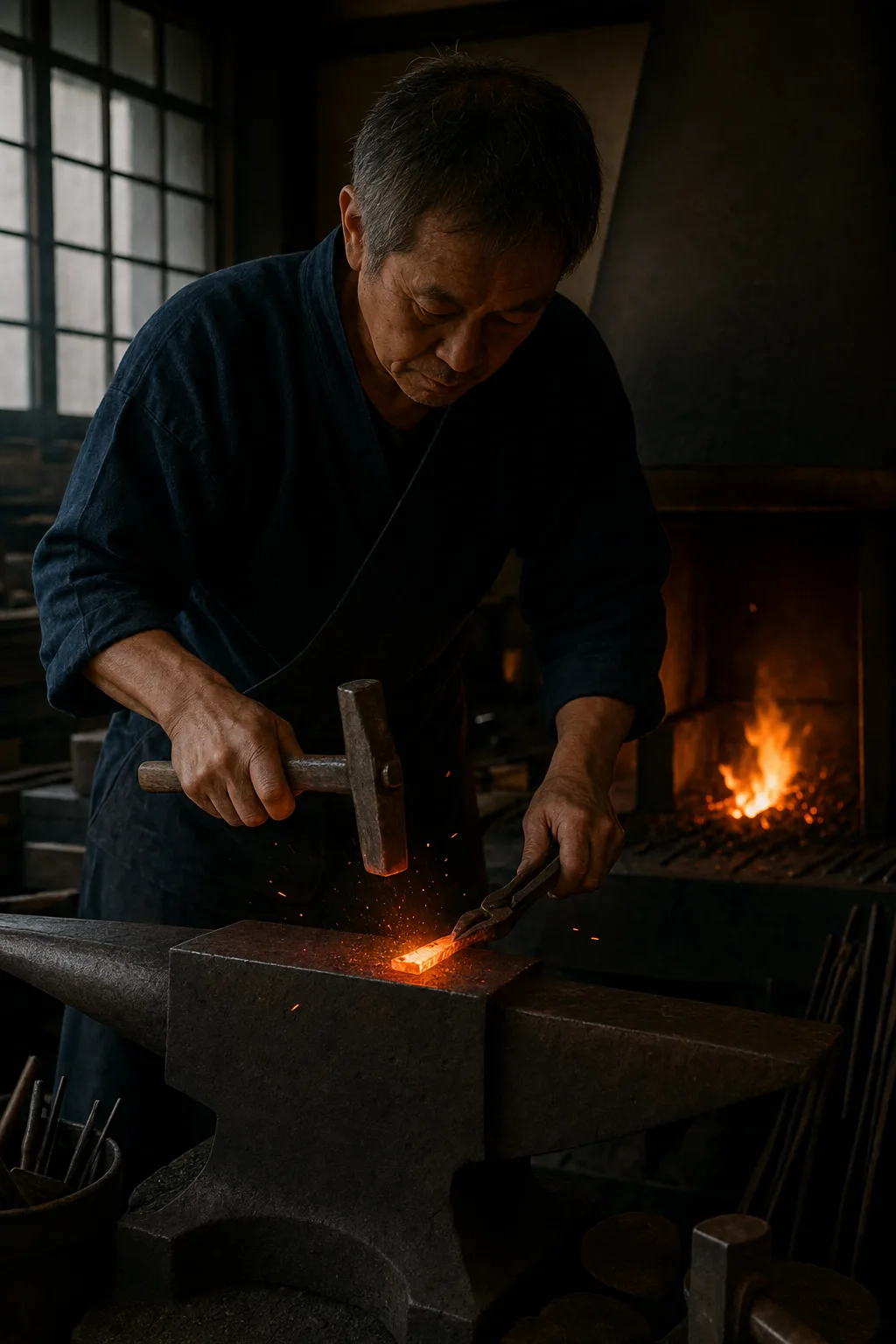
In MAKOTO's furniture, forged metal supports and adorns the wood as structural and decorative hardware. Its subtly wavering expression, beyond any machine, quietly sharpens the scenery of the grain.
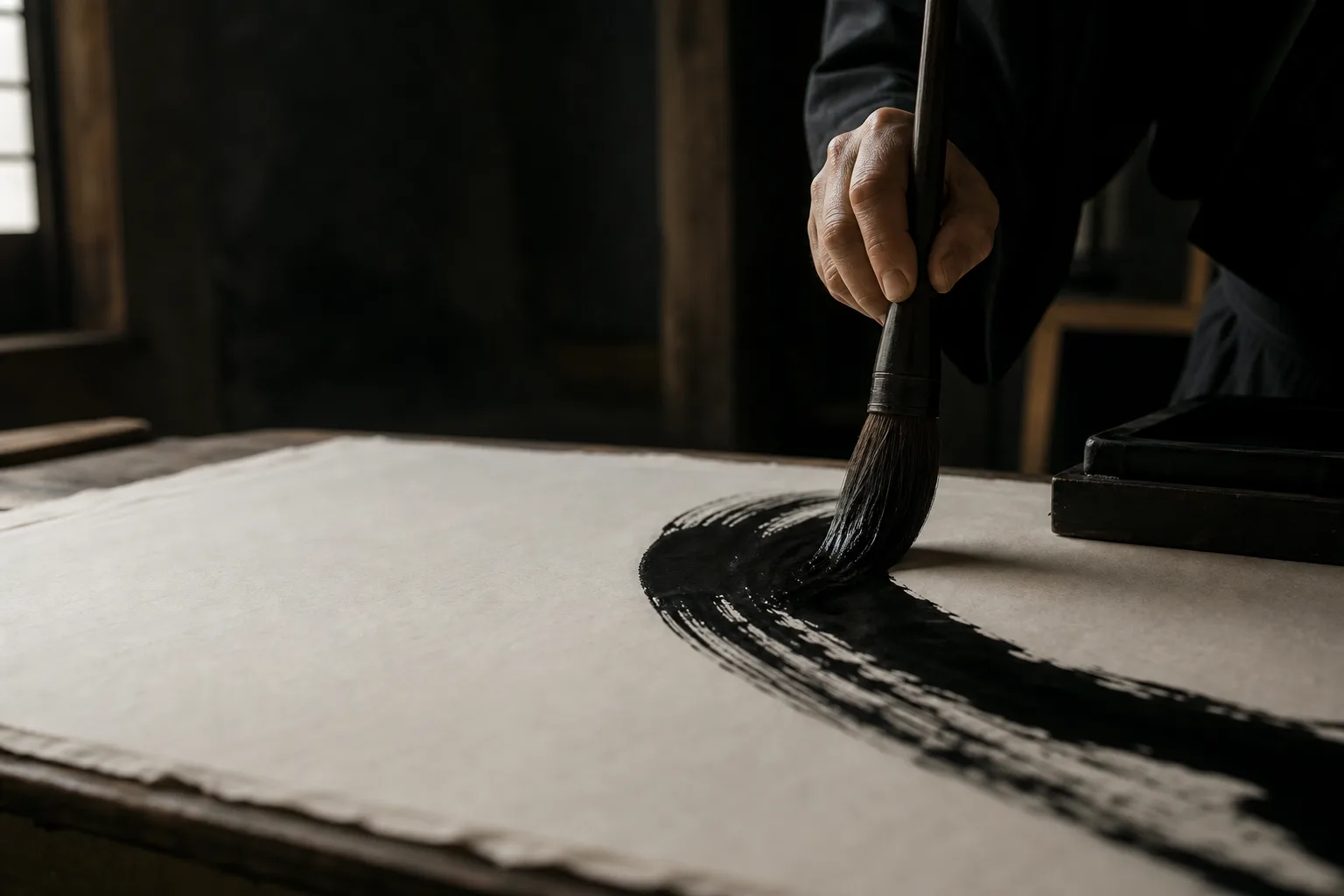
One stroke — never twice.
A single line drawn in one breath. Characters are born within a tension that allows no second attempt. To give a thing its name, to inscribe its signature — that unrepeatable act is the proof that each piece is the only one in the world.
The spirit held in ink and brush
The breath is steadied; the line is drawn in a single stroke. Calligraphy is born in a tension that permits no correction. Everything is decided the instant the brush touches down, and any hesitation shows in the line. That is why the calligrapher faces the paper with an empty mind.
Since antiquity, calligraphy has also been the act of giving things their names. With an inscribed signature, a tool becomes a work, and a work is passed on as memory. When characters enter a single slab, that wood bears its own name for the first time.
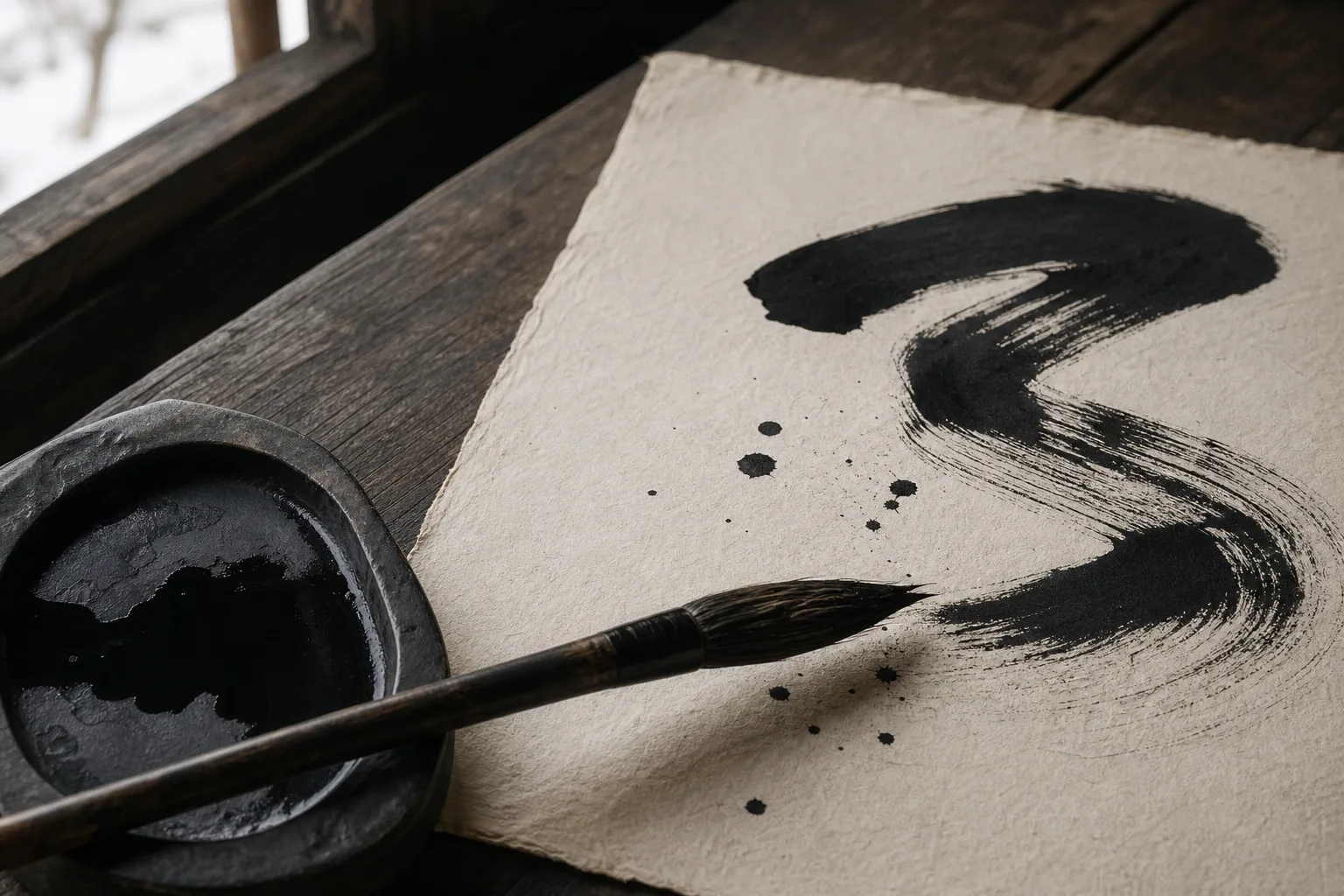
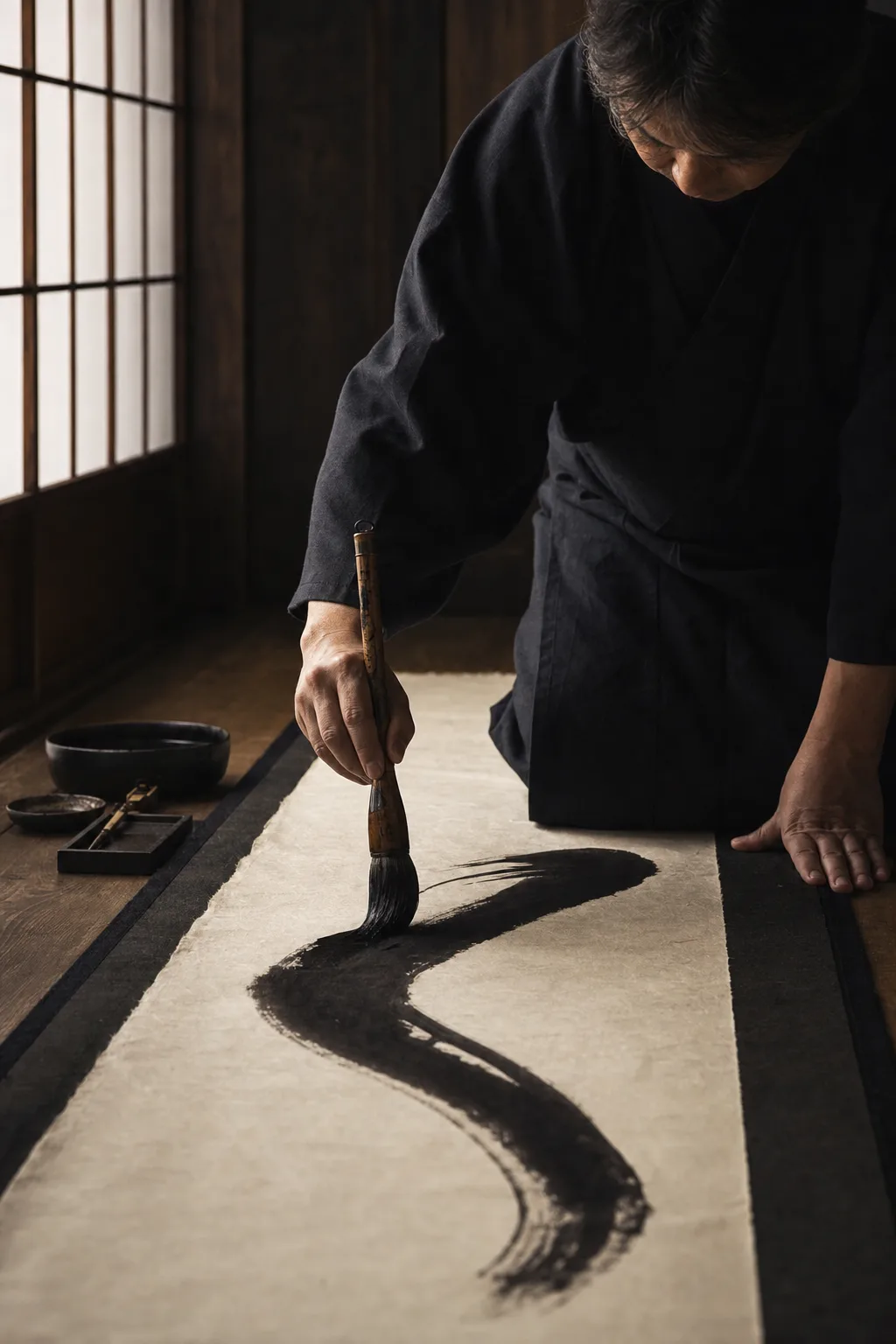
On each piece of MAKOTO furniture, the calligrapher Kenshin inscribes a signature, one by one. No two characters are ever the same — and that unrepeatability is the surest proof of being one of one in the world.
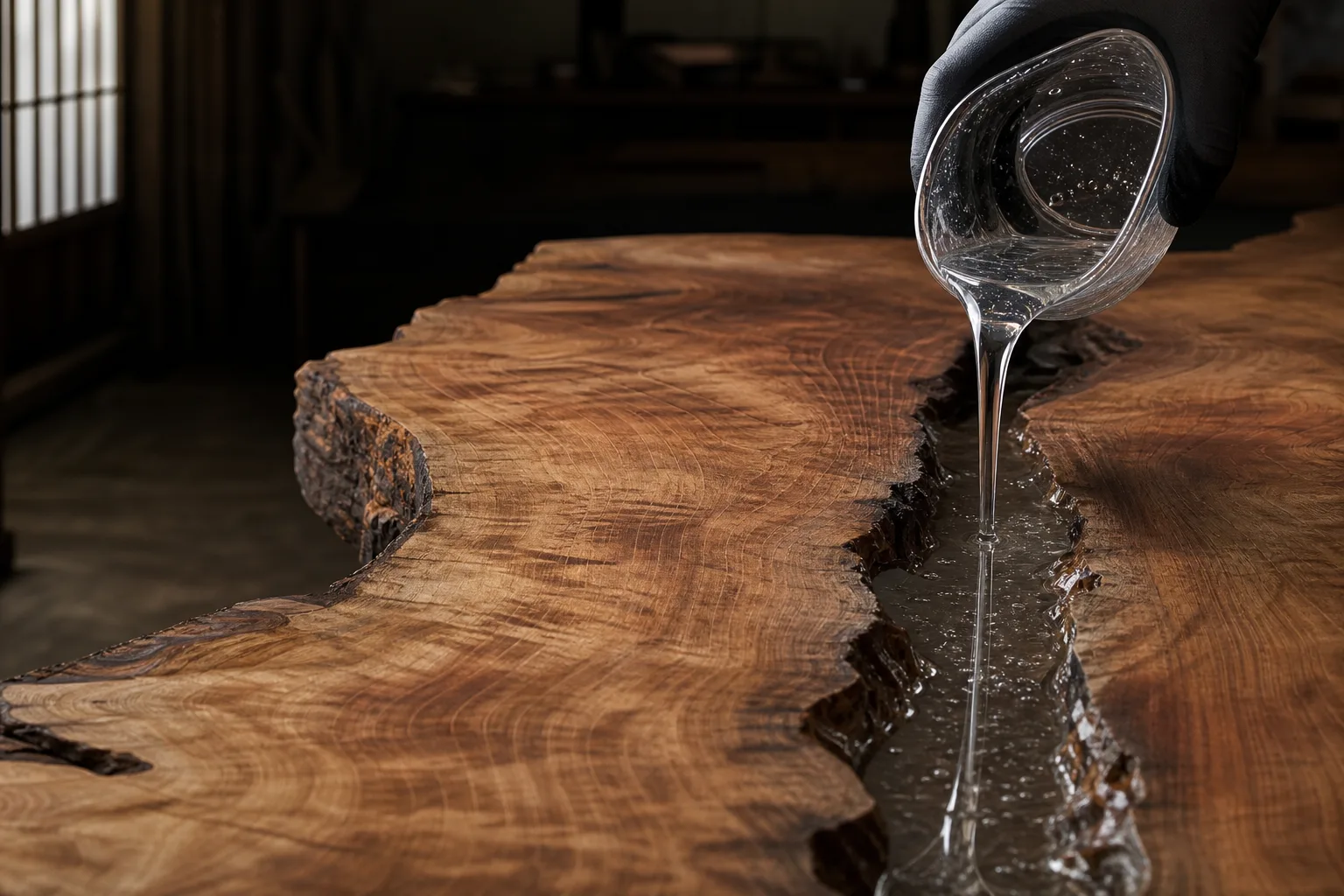
New life for perishing wood.
Transparent resin fills the hollows and cracks; degassing and curing are precisely controlled, restoring strength without harming the grain. A modern craft joined to three old ones — it saves wood on the verge of being lost, and completes the fusion of the four crafts.
The clarity of a modern material
Clear resin is poured slowly into hollows and cracks; air bubbles are drawn out one by one, temperature and curing speed finely controlled. Layer upon layer over several days — a patient, modern technique that quietly restores only the lost strength, leaving the grain untouched.
Temple carpentry, forging, calligraphy — to these three long-standing crafts, a modern material technology is added. Tradition is not merely something to protect; it renews itself by taking in the techniques of its own age. That is what MAKOTO believes.
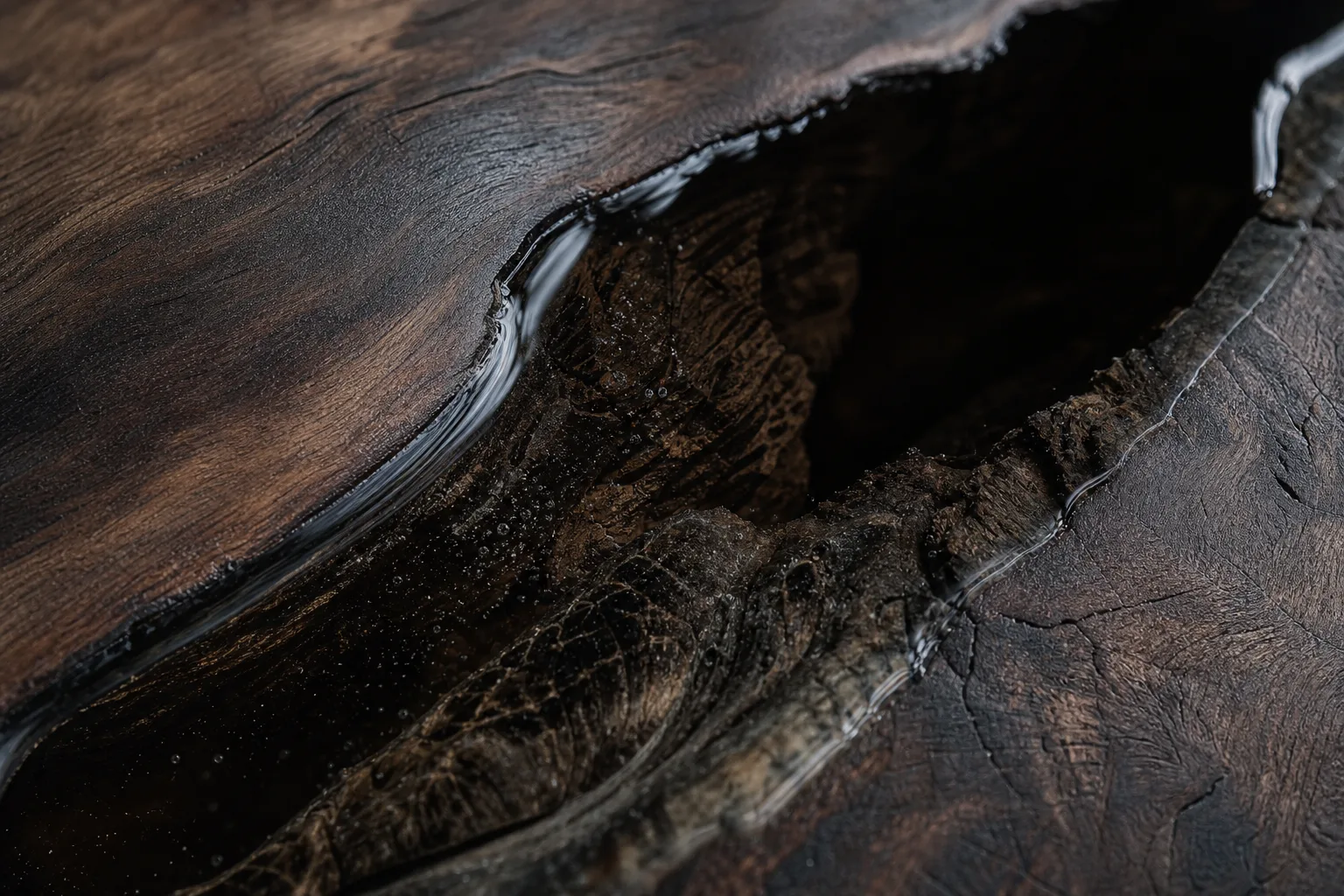
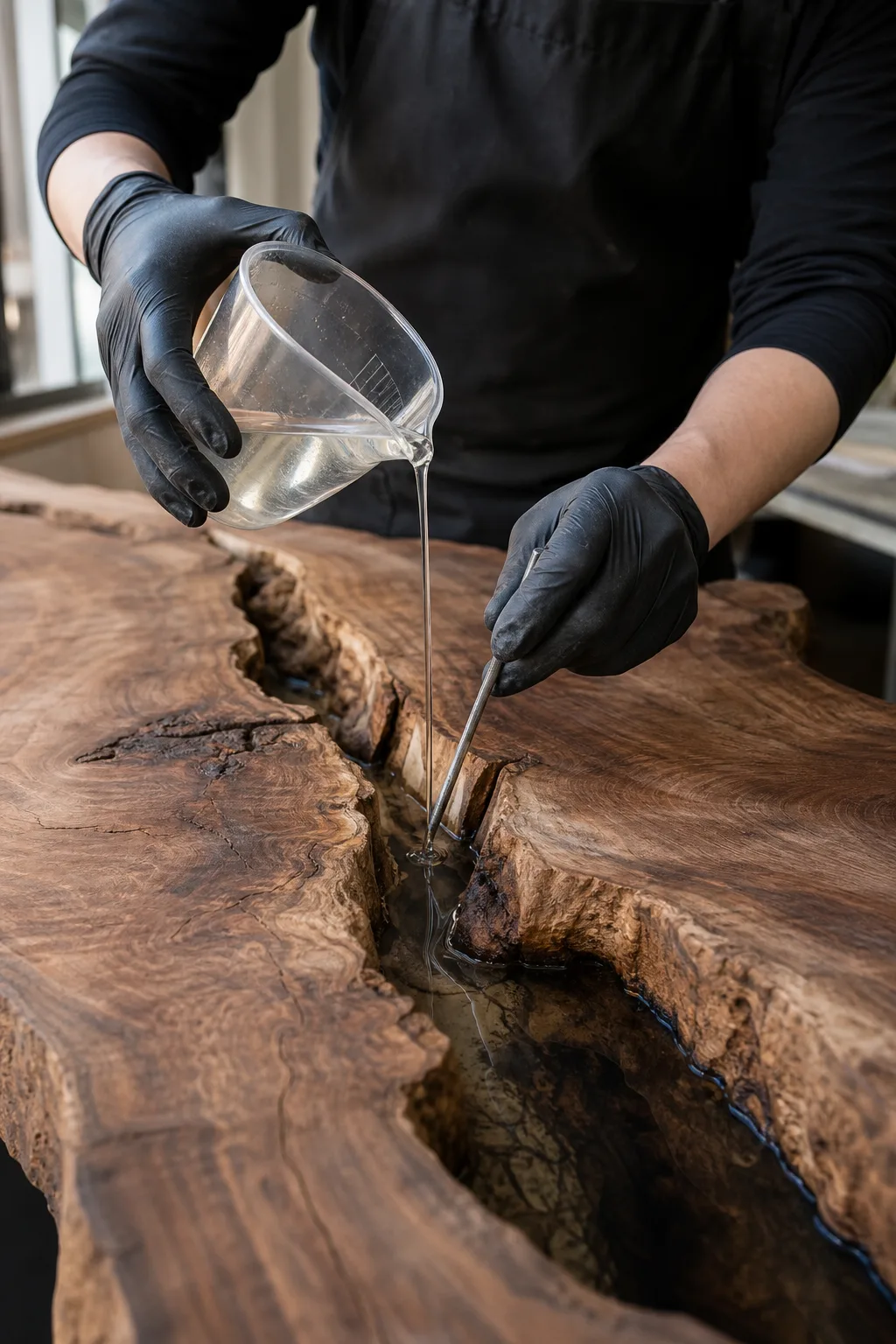
In MAKOTO's furniture, resin gives new life to wood on the edge of decay and closes the fusion of the four crafts. Through the transparency, you can see the hundred years the tree has lived. That is the work of resin.
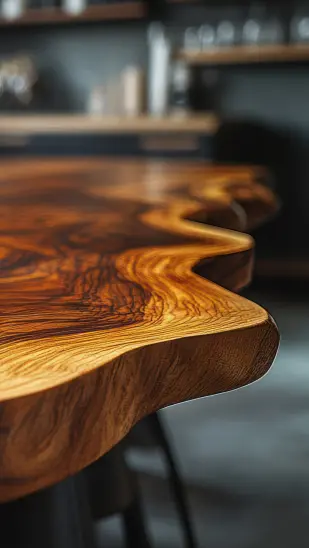
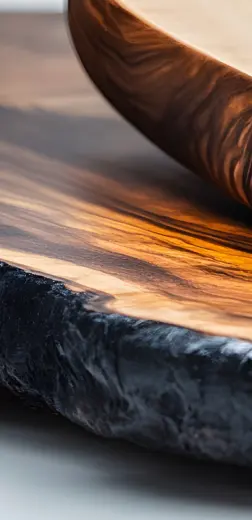
A single fine tree, and four crafts.
The piece born of their meeting is one of one —
found nowhere else in the world.
For the piece made for your space,
we walk beside you from the very beginning.